Exam results came out this week, and I've got my PGCE! Hooray! 5 years of 'gruelling' study (and arduous procrastination) have finally come to an end, and from now on the only exams I will write will be the ones I create in order to torment students. I still disagree with the examination process, for most subjects. It makes sense for law as you need to memorise stuff for that as a matter of course, but for more understanding-based subjects like art, language and Maths, I don't see the point in doing it under pressure in silence, without resources. It's hardly the real world.
This exam period was the easiest I've ever had, though. Questions given to us before the exam, open-book exams, being able to do them on a computer, and take-home questions that were so personal that it's almost impossible to get them wrong? Piece of cake.
Anyway, in terms of this blog, my PGCE experience has ended. I've tried to keep this blog up to date about that from start to finish, but now I'm moving into a different phase - going from theory and studying to the working world. I've got a job lined up - teaching through Epik in South Korea - and right now I'm enjoying the last long holiday I think I'll have for a while. Two months on a tropical island, then a couple of weeks skiing in France, and then I'm off on a brand new (and terrifying) adventure. I think I'm pretty lucky. :)
Looking back on the PGCE, it's been a hell of a year. It started with us climbing a mountain (and sliding back down, mostly on our bums, in the mud) only to be told that we should try to hike to 4 different waterfalls that afternoon. We walked on tight-rope across yawning chasms (I may be exaggerating slightly) for some disadvantaged kids, tried to learn to speak isiXhosa, planned lessons, planned lessons, planned lessons. There were some great assignments and some awful ones in which the entire class failed, and I'm pretty sure that my mark for one of the sections was sucked from thin air. We had a short-lived English Teachers' drinking club, and got tipsy on champagne at the end of the year with our wonderful lecturers. Not to mention 3 months of teaching in schools. And that was... interesting.
Anyway, it's been great. From this point on, though, the subject matter of this blog is going to change a bit, focusing more on Korea, and becoming a combination of a travel blog, personal updates for my friends, family and stalkers, and anything I think may be interesting to people who are currently teaching English in Korea or who may be planning to.
Here's to 2012. The world didn't end yesterday, but it's definitely changed a bit, for me.
Showing posts with label pgce. Show all posts
Showing posts with label pgce. Show all posts
Sunday, December 23, 2012

Wednesday, June 6, 2012
Planning that Research Project
I feel very productive today: during a lovely 2 hour lunch at the
local pub with some friends, I ended up planning out my research
project.

I structured the planning (I planned the planning... sheesh) and it ended up working quite well, and feeling very thorough. So, here is how I did it. I'm writing this as a set of tips, questions to answer and so on, with the aim of it being useful whatever your topic, and using my planning as an example. That said, I haven't even shown this to my supervisor yet, and after the email he just sent me, I have suspicions that he might want me to narrow my focus a little or something. Nevertheless, this should be helpful for pinning down exactly what you want to do. It might also help stimulate ideas.
In a previous post I talked about how to decide on a research topic using your passions, your area of interest. Now I'm going to go a bit further, talking about how to break it into research question(s) and how to plan your actual research, literature review and so on.
Step 1: Blow your brains out.

Brainstorm the crap out of your idea. Write down (in question form) all the different things you want to know about the topic you've chosen. For example, here's mine (on extended reading in High School):
 Step 2: Drown yourself in paper

The moment I started discussing education with my friends (something which is frowned upon in polite society) I discovered that a lot of my friends are casually interested in alternative education methods, such as those used by Homeschoolers and experimental schools. They threw books at me, which I am currently working my way through. At the same time, others have told me about workshops and conferences that might not immediately seem relevant, but which have actually generated a lot of ideas for me. So, while you're still at the stage of planning and thinking about the research project, become a sponge and soak up anything that interests you (whether it seems to apply to your project or not). And while you're reading, make a note if anything sparks your imagination or curiosity, or actually does seem relevant.
NB - make sure you keep track of your sources. I've got a page in a notebook where I've been scribbling the titles of books, articles, workshops and conferences as I've stumbled across them. If a particular quote jumps out at me, I make a note of it and scribble down the source and page number. This doesn't need to be according to any referencing standard just yet - it's just source-gathering for now. It also helps if you write a little reminder of what the thing was so you can find it more easily later and avoid future stress.
Here's a list of what I've got so far:
Step 3: Divide and conquer

Go back to your brainstormed questions and add in things if you need to, now that you've done some reading. Has your area of interest broadened or narrowed? Have you come across an idea that you want to run with, or an obstacle that is making you flee?
Now look carefully at it, and try to group similar ideas together so that it's more manageable, while including things about your practical application of the idea.
E.g:
Breakdown of thoughtsplots
Step 4: Strategy
Now you need to think about how you can actually research the answers to these questions. So, divide a piece of paper in half, and write down each question as simply as you can on one side. On the other, write down how you would go about answering it.
E.g:
 Step 5: Tick tock...

Now draw up a rough guide of how much time you have to carry out your research. Ours is about 10 weeks. Give yourself a a vague idea of what you need to accomplish in each week.
E.g:
Pre-TP: Info-gathering. Start literature review, attend conferences and workshops, get as much reading done as possible because TP will have lots of marking etc going on. Might be a good idea to finish lit review and come up with a list of core principles common to the alternative teaching methods eg "Make it fun"
Week 1-2: A bit frazzled because of adjusting to the timetable, getting to know the class and so on. Discuss your idea with mentor teacher - they might be able to suggest things. Find out what existing structures are in place, what students' attitudes to reading are, what the limits of the social context are, and how to source books. Check what's available and compile a reading list.
Week 3-10: Apply the program to a small group of volunteers (a common principle is that they need freedom, they must choose to do it, it must be optional and fun and worthwhile). Apply the principles outlined in the literature and keep a detailed record of what works and what doesn't. Can this be extended to a large group? Does it need to be compulsory? What level of supervision is necessary? Does the book list need tweaking - should students have input into the list?
Step 6: Fill in the gaps.

As my project is very practically based, I think I need some way of assessing whether it is working or not. However, I can't use conventional methods such as a written test or survey because the alternative teaching principles, and the aim of the project, mean that it should be putting forward the idea of reading as fun and intrinsically valuable. Therefore, nothing should be "for marks", and there shouldn't be a formal assessment of the students. But how can we tell if they're reading? Here I brainstormed a few more ideas:
Look over what you've got and visualise your supervisor's response to it. Imagine your supervisor as being a cynical, over-critical meanie who just doesn't get it. What are they pointing out? Deal with it. Solve the problem.

Imaginary Supervisor: Hmm... all this airy-fairy bollocks about child-directed education suggests to me that they'll just run around like crazy people in your sessions and they won't do anything productive. Are you telling me this whole thing is completely unstructured? Is this just a wordy way of getting out of doing your work, while looking busy?
Me: Aha! It's not unsupervised or unstructured. There will be a planned (but flexible) program of multimedia activities aimed at exploring reading and stimulating creativity, with the aim of making reading fun. This program needs to feel more like play than like work, otherwise the kids will never develop a passion for reading. There will be a regular meeting at the same place and time each week, and the format of the sessions will be structured according to a lesson plan - opening activity, body, conclusion. However, because this is 'fun' and relies on independent reading and personal engagement, the learners must feel that they have an investment in it, thus the idea of getting them to help construct the program. If they think of an activity then they can run it in the next session, if they want to (and if it's relevant) and so on. Do not confuse creative freedom and an emphasis on playful engagement with anarchy and a lack of a plan.
Some final notes
Remember that while planning your research project, things might not turn out exactly as you want them to. You may need to tweak, compromise, or even scrap the whole thing. Don't be precious about it. Adapt, and develop your idea.
For example, my initial plan was to implement Nal'ibali's methods in a high school. Then I went to the Nal'ibali workshop and found that it was more appropriate for juniors than seniors, and so I've decided to apply their principles and concepts rather than their exact plan. At the same time I've recently done a lot of reading into alternative education methods that has gotten me excited, so I've decided to see if there are any strategies or principles in there that might help - I think this is relevant because an extended reading program is by nature outside of the classroom, and so traditional classroom methods probably won't work in this case. Instead, methods that encourage self-study and the students' personal investment in the work are much more likely to help my project succeed.
Now that you've got all this planned out in scribbles on scrap paper, or neatly colour coded in a file system to rival the server room at Google, go have a chat to your supervisor and see what they have to say. Don't lose these notes, though - they might help with your research proposal.

I structured the planning (I planned the planning... sheesh) and it ended up working quite well, and feeling very thorough. So, here is how I did it. I'm writing this as a set of tips, questions to answer and so on, with the aim of it being useful whatever your topic, and using my planning as an example. That said, I haven't even shown this to my supervisor yet, and after the email he just sent me, I have suspicions that he might want me to narrow my focus a little or something. Nevertheless, this should be helpful for pinning down exactly what you want to do. It might also help stimulate ideas.
In a previous post I talked about how to decide on a research topic using your passions, your area of interest. Now I'm going to go a bit further, talking about how to break it into research question(s) and how to plan your actual research, literature review and so on.
Step 1: Blow your brains out.

Brainstorm the crap out of your idea. Write down (in question form) all the different things you want to know about the topic you've chosen. For example, here's mine (on extended reading in High School):



The moment I started discussing education with my friends (something which is frowned upon in polite society) I discovered that a lot of my friends are casually interested in alternative education methods, such as those used by Homeschoolers and experimental schools. They threw books at me, which I am currently working my way through. At the same time, others have told me about workshops and conferences that might not immediately seem relevant, but which have actually generated a lot of ideas for me. So, while you're still at the stage of planning and thinking about the research project, become a sponge and soak up anything that interests you (whether it seems to apply to your project or not). And while you're reading, make a note if anything sparks your imagination or curiosity, or actually does seem relevant.
NB - make sure you keep track of your sources. I've got a page in a notebook where I've been scribbling the titles of books, articles, workshops and conferences as I've stumbled across them. If a particular quote jumps out at me, I make a note of it and scribble down the source and page number. This doesn't need to be according to any referencing standard just yet - it's just source-gathering for now. It also helps if you write a little reminder of what the thing was so you can find it more easily later and avoid future stress.
Here's a list of what I've got so far:
- Summerhill by A. S. Neill - experimental school, no rules! Make learning relevant and fun and intrinsically valuable, not forced.
- Unschooling: A Handbook - child-directed education, less supervision, more on them learning better if they're interested rather than forced to do irrelevant stuff. Lots of first-hand contributions.
- Teaching as a Subversive Activity - have not read yet.
- Nal'ibali workshop - a reading group program aimed at small kids but using interesting alternative education methods to promote the idea of reading being a fun, social activity
- English Educators Conference - July 2nd, R120 fee - remember to send in form!
Step 3: Divide and conquer

Go back to your brainstormed questions and add in things if you need to, now that you've done some reading. Has your area of interest broadened or narrowed? Have you come across an idea that you want to run with, or an obstacle that is making you flee?
Now look carefully at it, and try to group similar ideas together so that it's more manageable, while including things about your practical application of the idea.
E.g:
Breakdown of thoughtsplots
- Why aren't they reading? Lack of interest, economic factors, stigma against reading for fun
- What are the existing structures in place at the school? Are they working, ineffective, non-existent?
- How can alternative learning principles/strategies be used to construct a sustainable extended reading program in a South African high school?
Step 4: Strategy
Now you need to think about how you can actually research the answers to these questions. So, divide a piece of paper in half, and write down each question as simply as you can on one side. On the other, write down how you would go about answering it.
E.g:


Now draw up a rough guide of how much time you have to carry out your research. Ours is about 10 weeks. Give yourself a a vague idea of what you need to accomplish in each week.
E.g:
Pre-TP: Info-gathering. Start literature review, attend conferences and workshops, get as much reading done as possible because TP will have lots of marking etc going on. Might be a good idea to finish lit review and come up with a list of core principles common to the alternative teaching methods eg "Make it fun"
Week 1-2: A bit frazzled because of adjusting to the timetable, getting to know the class and so on. Discuss your idea with mentor teacher - they might be able to suggest things. Find out what existing structures are in place, what students' attitudes to reading are, what the limits of the social context are, and how to source books. Check what's available and compile a reading list.
Week 3-10: Apply the program to a small group of volunteers (a common principle is that they need freedom, they must choose to do it, it must be optional and fun and worthwhile). Apply the principles outlined in the literature and keep a detailed record of what works and what doesn't. Can this be extended to a large group? Does it need to be compulsory? What level of supervision is necessary? Does the book list need tweaking - should students have input into the list?
Step 6: Fill in the gaps.
As my project is very practically based, I think I need some way of assessing whether it is working or not. However, I can't use conventional methods such as a written test or survey because the alternative teaching principles, and the aim of the project, mean that it should be putting forward the idea of reading as fun and intrinsically valuable. Therefore, nothing should be "for marks", and there shouldn't be a formal assessment of the students. But how can we tell if they're reading? Here I brainstormed a few more ideas:
- get them to keep reading journals in which they respond to the books they are reading. These can be in any form they want, and they can swear, doodle, etc, as long as they're responding to a text. They are not for marks but the teacher needs to be able to see that they are being updated. If learners want feedback they are free to give them in for non-marks-based comments and so on.
- group discussions about themes and so on that crop up in the books, eg divorce, rape, world travel, magic, etc.
- projects during the group meetings in which learners creatively respond to what they're reading, including songs, dance, skits, games, debate, drawings, poetry, etc.
- feedback from students in the form of a questionnaire
Look over what you've got and visualise your supervisor's response to it. Imagine your supervisor as being a cynical, over-critical meanie who just doesn't get it. What are they pointing out? Deal with it. Solve the problem.

Imaginary Supervisor: Hmm... all this airy-fairy bollocks about child-directed education suggests to me that they'll just run around like crazy people in your sessions and they won't do anything productive. Are you telling me this whole thing is completely unstructured? Is this just a wordy way of getting out of doing your work, while looking busy?
Me: Aha! It's not unsupervised or unstructured. There will be a planned (but flexible) program of multimedia activities aimed at exploring reading and stimulating creativity, with the aim of making reading fun. This program needs to feel more like play than like work, otherwise the kids will never develop a passion for reading. There will be a regular meeting at the same place and time each week, and the format of the sessions will be structured according to a lesson plan - opening activity, body, conclusion. However, because this is 'fun' and relies on independent reading and personal engagement, the learners must feel that they have an investment in it, thus the idea of getting them to help construct the program. If they think of an activity then they can run it in the next session, if they want to (and if it's relevant) and so on. Do not confuse creative freedom and an emphasis on playful engagement with anarchy and a lack of a plan.
Some final notes
Remember that while planning your research project, things might not turn out exactly as you want them to. You may need to tweak, compromise, or even scrap the whole thing. Don't be precious about it. Adapt, and develop your idea.
 |
| Be flexible, and try a different angle. |
For example, my initial plan was to implement Nal'ibali's methods in a high school. Then I went to the Nal'ibali workshop and found that it was more appropriate for juniors than seniors, and so I've decided to apply their principles and concepts rather than their exact plan. At the same time I've recently done a lot of reading into alternative education methods that has gotten me excited, so I've decided to see if there are any strategies or principles in there that might help - I think this is relevant because an extended reading program is by nature outside of the classroom, and so traditional classroom methods probably won't work in this case. Instead, methods that encourage self-study and the students' personal investment in the work are much more likely to help my project succeed.
Now that you've got all this planned out in scribbles on scrap paper, or neatly colour coded in a file system to rival the server room at Google, go have a chat to your supervisor and see what they have to say. Don't lose these notes, though - they might help with your research proposal.
Wednesday, February 8, 2012
Orientation Week, Day Two: The state of Schools in SA and Teaching our Own Lessons
Whoops, this post is a little late. To tell the truth, I was so exhausted by the time I got home that all I managed to do was a little emergency grocery shopping before collapsing onto my bed at about 7pm.

So here's a little catch-up post about what happened yesterday.
Schools in Post-Apartheid SA
Di showed us Molly Blank's film, "Testing Hope" which follows the lives of 4 South Africans in a township school during the build-up to Matric, the exam, and the aftermath. And I cried like a baby. Beyond what I've already discussed, about the language barriers and so on, these kids have to learn in classrooms that don't have all the facilities available to those in ex-Model C and Independent Schools. And they have to compete with students from those schools for places in Universities. Even if they're the top student in their school, they might lose out to the worst student in an Independent School simply because that student has access to a well-stocked library, computers, the internet, sports facilities, and even basic nutritional requirements.

Di told us that one of her research students has discovered that the biggest barrier to education in South Africa is fetal alcohol syndrome. Teen mothers are given a grant which is supposed to be spent on food for the child, but instead they spend it on alcohol for themselves. And if the father is drunk at the time of conception, the risk for FAS is increased as well.
Watching it made me wonder if my decision to go to South Korea is a selfish one. But I thought about it some more, and now I think that if I can rake in quite a bit of money in South Korea, then I could possibly return to SA and work in a State School for a year or so (as my salary then won't be as important) and maybe in that way I can try to help. I can always go and teach overseas again after that. I've also decided to apply to tutor English Home and/or Second Language at the GADRA Matric school, which helps matrics who have failed or not achieved the marks they need for university to do so.
Teaching our Own Classes
A major part of the course consists of us teaching our own classes. First we'll present lessons to our peers - today I am going to be teaching a lesson about Scuba Diving - and then later in the year we'll go to schools and teach real classes. So, last night I planned my very first lesson! I'm starting with a fun quiz about dangerous fish as an ice breaker, bringing in my gear and log book to hand around, and most of the class will (hopefully) consist of them providing the knowledge - I was really impressed with the sense of "Communal Development of Knowledge" that I noticed in Hennie's lecture on Day 1.

Of course, last night I dreamed that I couldn't log onto the computer in the venue in order to play the slideshow, and that the password was "Sparky", and woke up with a sore jaw from grinding my teeth. I woke up at 6 this morning to make sure I was ready in time. Well, I am. An hour and a half early. Gawsh. Anyway, my nerves are killing me, but I think that starting the lesson by standing in front of them with my scuba mask and snorkel on should help to break the ice a bit more. One guy taught the entire year group yesterday, and he was very good and very brave. The class seemed to be very supportive - I think we're all so scared of teaching an unresponsive class of blank faces who can only criticise and are unimpressed that we're also all trying not to be that class. Hal asked a lot of interesting questions in the class, and all the comments on Brett's teaching were in the form of [compliment]+[criticism], which worked nicely and naturally.

So I'm afraid. But I think it will go well.

So here's a little catch-up post about what happened yesterday.
Schools in Post-Apartheid SA
Di showed us Molly Blank's film, "Testing Hope" which follows the lives of 4 South Africans in a township school during the build-up to Matric, the exam, and the aftermath. And I cried like a baby. Beyond what I've already discussed, about the language barriers and so on, these kids have to learn in classrooms that don't have all the facilities available to those in ex-Model C and Independent Schools. And they have to compete with students from those schools for places in Universities. Even if they're the top student in their school, they might lose out to the worst student in an Independent School simply because that student has access to a well-stocked library, computers, the internet, sports facilities, and even basic nutritional requirements.

Di told us that one of her research students has discovered that the biggest barrier to education in South Africa is fetal alcohol syndrome. Teen mothers are given a grant which is supposed to be spent on food for the child, but instead they spend it on alcohol for themselves. And if the father is drunk at the time of conception, the risk for FAS is increased as well.
 |
| My, what great role models they have. |
Watching it made me wonder if my decision to go to South Korea is a selfish one. But I thought about it some more, and now I think that if I can rake in quite a bit of money in South Korea, then I could possibly return to SA and work in a State School for a year or so (as my salary then won't be as important) and maybe in that way I can try to help. I can always go and teach overseas again after that. I've also decided to apply to tutor English Home and/or Second Language at the GADRA Matric school, which helps matrics who have failed or not achieved the marks they need for university to do so.
Teaching our Own Classes
A major part of the course consists of us teaching our own classes. First we'll present lessons to our peers - today I am going to be teaching a lesson about Scuba Diving - and then later in the year we'll go to schools and teach real classes. So, last night I planned my very first lesson! I'm starting with a fun quiz about dangerous fish as an ice breaker, bringing in my gear and log book to hand around, and most of the class will (hopefully) consist of them providing the knowledge - I was really impressed with the sense of "Communal Development of Knowledge" that I noticed in Hennie's lecture on Day 1.

Of course, last night I dreamed that I couldn't log onto the computer in the venue in order to play the slideshow, and that the password was "Sparky", and woke up with a sore jaw from grinding my teeth. I woke up at 6 this morning to make sure I was ready in time. Well, I am. An hour and a half early. Gawsh. Anyway, my nerves are killing me, but I think that starting the lesson by standing in front of them with my scuba mask and snorkel on should help to break the ice a bit more. One guy taught the entire year group yesterday, and he was very good and very brave. The class seemed to be very supportive - I think we're all so scared of teaching an unresponsive class of blank faces who can only criticise and are unimpressed that we're also all trying not to be that class. Hal asked a lot of interesting questions in the class, and all the comments on Brett's teaching were in the form of [compliment]+[criticism], which worked nicely and naturally.

So I'm afraid. But I think it will go well.
Monday, February 6, 2012
PGCE SP Orientation, Day One
Phew. It's been a hell of a long day - started by waking up at 7. My cunning plan of putting some tea on while I had a shower worked like a bomb - by the time I was sparkly clean, the tea was ready to be gulped down before I walked with a couple of friends to our very first lecture. Now, at 16:30, I can finally put my feet up and take a breath.
First impressions
After months of no information beyond our term dates, today has been something of a bombardment, with about 20 staff members' names and other important information. There are about 100 of us doing PGCE this year, and that is split into Foundation Phase, Intermediate Phase and Senior Phase/FET (which I am doing).
We spent a good 2 hours (with a short tea break) going through introductions to all the staff members, whose names I've forgotten already, and getting to know our classmates with a fun icebreaker and a lengthy but interesting introduction of each person and their background, goals and expectations of the course. It's a fantastic mix of people - some of them have families, some have already been teaching for years, one guy sells longboards, another has already taught in Japan, and everyone seems pretty friendly and excited about the course so far. We also got a big booklet, full of all the information I've been so antsy about.
Teaching Interaction
After a lunch in which I rushed across town to buy stationery, acquired delicious sushi, bumped into freshly-returned-from-holidays friends and showed my friends a nice shady gazebo sort of thing, we launched into our first lecture. A friend mentioned a particular lecturer as being amazing, and Hennie definitely lived up to his reputation.
We watched some clips of hollywood movies of teachers like The Dead Poets Society, set to Pink Floyd and Queen (which got Hennie my instant respect), and then talked about various elements of teaching. What do we talk about when we talk about teaching? Well, the lecture itself was very interactive, with Hennie posing the question and asking us to fill in the blanks with basic observations of the lecture itself. Things like diction, the power dynamics between the lecturer and students, interaction, intimacy, informality, control, and different learning styles were mentioned.

Then he showed us some clips of real teachers teaching. First a grade 1 teacher who was teaching a small group of about 20 young kids to count, using everything from counting blocks to her toes, to their ears, and it was amazing. Once again I find myself wondering if I have chosen the right phase, as it definitely looks more fun to teach younger children. I can't imagine what a teenager would do if I tweaked their ears and noses to teach them maths. Hmmm...
Language in Schools
Another clip showed a high school teacher who was teaching maths to disadvantaged Xhosa kids. She gave them a problem and told them they needed to work it out in pairs, and left them to it. It was interesting that the kids discussed the problem in English even though they shared isiXhosa as a home language. Maybe they see English as the language of School, which could be good. Or maybe they see it as the language of Knowledge, which worries me (having had post-colonialism and the colonisation of the mind drilled into me during my English Literature studies).
I think that shows the importance of home language education, which is not quite fully available in South Africa yet. Granted we've come pretty far since the kids were forced to learn in Afrikaans back in the days of Apartheid, with every school now teaching an African language as a subject. But it would be ideal to see schools that taught kids the major subjects like Maths and Science in their home language so that a) they can understand the concepts without having to translate them first and b) they don't feel that knowledge belongs to a specific language or culture. Of course, there's a hell of a shortage of teachers in this country, and looking at my class, 95% of them spoke English as a home language. People in the class who speak other South African languages at home, now in their early/mid-twenties, have been educated in English or Afrikaans, and so tertiary education is also in either of those two languages, so it's clear that having fully isiXhosa or isiZulu schools are quite a bit far off, but I do hope it happens.

I think that might be why basic isiXhosa is a compulsory part of doing the PGCE, and while I'm terrified of having to learn a new language that is so different to either of the languages I speak fluently (English and French), I am keen to both learn it, and observe how they teach it to us, so I can put some of those ideas into practice when I get my own classroom.
And the grand finale!
It turns out that our university has an exchange program with Switzerland, and they will select 4 applicants to send to Switzerland to do our teaching practicals there. I cannot even begin to tell you how much I want to do this. More information on that to come, though. SO KEEN.
First impressions
After months of no information beyond our term dates, today has been something of a bombardment, with about 20 staff members' names and other important information. There are about 100 of us doing PGCE this year, and that is split into Foundation Phase, Intermediate Phase and Senior Phase/FET (which I am doing).
We spent a good 2 hours (with a short tea break) going through introductions to all the staff members, whose names I've forgotten already, and getting to know our classmates with a fun icebreaker and a lengthy but interesting introduction of each person and their background, goals and expectations of the course. It's a fantastic mix of people - some of them have families, some have already been teaching for years, one guy sells longboards, another has already taught in Japan, and everyone seems pretty friendly and excited about the course so far. We also got a big booklet, full of all the information I've been so antsy about.
 |
| YAY! |
Teaching Interaction
After a lunch in which I rushed across town to buy stationery, acquired delicious sushi, bumped into freshly-returned-from-holidays friends and showed my friends a nice shady gazebo sort of thing, we launched into our first lecture. A friend mentioned a particular lecturer as being amazing, and Hennie definitely lived up to his reputation.
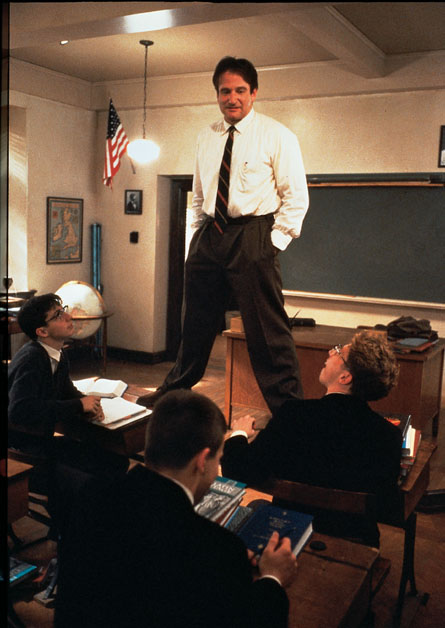
We watched some clips of hollywood movies of teachers like The Dead Poets Society, set to Pink Floyd and Queen (which got Hennie my instant respect), and then talked about various elements of teaching. What do we talk about when we talk about teaching? Well, the lecture itself was very interactive, with Hennie posing the question and asking us to fill in the blanks with basic observations of the lecture itself. Things like diction, the power dynamics between the lecturer and students, interaction, intimacy, informality, control, and different learning styles were mentioned.
Then he showed us some clips of real teachers teaching. First a grade 1 teacher who was teaching a small group of about 20 young kids to count, using everything from counting blocks to her toes, to their ears, and it was amazing. Once again I find myself wondering if I have chosen the right phase, as it definitely looks more fun to teach younger children. I can't imagine what a teenager would do if I tweaked their ears and noses to teach them maths. Hmmm...
Language in Schools
Another clip showed a high school teacher who was teaching maths to disadvantaged Xhosa kids. She gave them a problem and told them they needed to work it out in pairs, and left them to it. It was interesting that the kids discussed the problem in English even though they shared isiXhosa as a home language. Maybe they see English as the language of School, which could be good. Or maybe they see it as the language of Knowledge, which worries me (having had post-colonialism and the colonisation of the mind drilled into me during my English Literature studies).
I think that shows the importance of home language education, which is not quite fully available in South Africa yet. Granted we've come pretty far since the kids were forced to learn in Afrikaans back in the days of Apartheid, with every school now teaching an African language as a subject. But it would be ideal to see schools that taught kids the major subjects like Maths and Science in their home language so that a) they can understand the concepts without having to translate them first and b) they don't feel that knowledge belongs to a specific language or culture. Of course, there's a hell of a shortage of teachers in this country, and looking at my class, 95% of them spoke English as a home language. People in the class who speak other South African languages at home, now in their early/mid-twenties, have been educated in English or Afrikaans, and so tertiary education is also in either of those two languages, so it's clear that having fully isiXhosa or isiZulu schools are quite a bit far off, but I do hope it happens.
I think that might be why basic isiXhosa is a compulsory part of doing the PGCE, and while I'm terrified of having to learn a new language that is so different to either of the languages I speak fluently (English and French), I am keen to both learn it, and observe how they teach it to us, so I can put some of those ideas into practice when I get my own classroom.
And the grand finale!
It turns out that our university has an exchange program with Switzerland, and they will select 4 applicants to send to Switzerland to do our teaching practicals there. I cannot even begin to tell you how much I want to do this. More information on that to come, though. SO KEEN.
 |
| Ahem. |
Subscribe to:
Posts (Atom)