Showing posts with label orientation. Show all posts

Tuesday, February 26, 2013

Orientation highs and lows

As orientation starts winding up, with classes over and lesson demonstrations tomorrow, I think it's time I compiled a list of the good things and bad things that have summed up the last week or so of my preparation for teaching in Daegu.

Highs

  • Meeting people who will be living in my city, or even near my school
  • Building friendships that look like they'll last a long time
  • Hysterically funny conversation over lunch and dinner
  • Trying to eat scrambled eggs with chopsticks - and succeeding!
  • Playing drinking games with random ajeossis in the local watering hole
  • Being the only people in the bar and getting special treatment because of it
  • Learning Korean at lightning speed
  • The friendliness 
  • Jumping around like a maniac and kicking the crap out of the taekwondo paddle
  • Playing in the snow
  • Learning about Korea from Koreans, and about teaching in it from teachers who've done it
  • Singing the Koala song in Korean - Kokoko, alalal, lalala
  • Accidentally discovering the market
  • Heated toilet seats
  • Noraebuses
  • Fantastic Epik staff
  • The lady in the convenience store
  • Sitting with lecturers at meals and hearing the 'deleted' bits
  • Meeting people for what you both thought was the first time, only to realise that not only were you in the same class at university, but you trained together and worked at a bar together for a couple of weeks.
Lows
  • The key system - having one key between two people who hardly see each other is a pain in the arse.
  • No one has ever heard of Mauritius. 
  • Being too cold outside and too hot inside. 
  • Long lectures with no breaks, and the impossibility of keeping your eyes open
  • Whoever stole my shampoo before I'd even put my bags in my room
  • Hearing about people failing their drug test, or of people giving up and going home before they'd even gone to their city.
  • Making friends with amazing people... who are moving to the other end of Korea
  • Being woken by the Voice Of the Intercom God every couple of minutes in the morning
  • Not having clean clothes or time to wash them
  • The food getting progressively more western and less edible
  • Being treated like a child
  • The midnight curfew
  • The feeling of it being a school camp
  • Living out of a suitcase
  • Internet that only works sometimes, and not nearly at the speed of the infamous Korean bandwidth
  • Not speaking Korean well enough to get directions to the outdoor market, rather than to the 7/11, while leading a group of people on a wild goose chase
  • Hungry elevators that eat you and then ignore which button you pressed and go to whichever floor they feel like visiting at the time, in the wrong direction.
But even then, the bad bits aren't so bad. It's been fun, but I'm definitely looking forward to unpacking, throwing a load of laundry into the machine, and going for a long walk around my neighbourhood. Luckily for me, we've got a long weekend as I arrive, so I can do just that.

Thursday, January 24, 2013

Avoiding a false positive on the Epik Drug Test

According to the Epik Coordinator on Facebook, a lot of South African applicants get false positives at the drug test at orientation because South African flu/cold medicine and over-the-counter pain medicine contain small amounts of morphine and other such banned substances. So I did some googling for all the things that might cause false positives in a drug test.

The most detailed list I found was here.

The ones that jump out immediately to me are things like Vicks inhalers, ibuprofen (often used to treat menstrual cramps), nasal sprays, Ritalin, diabetes, tonic water, non-steroidal anti-inflammatories (like Voltaren, which also contains ibuprofen), antibiotics, sleeping pills, night-time cold medicine, cough medicine,  poppy seeds and codeine-based pain-killers. This is not everything though, so I seriously recommend you check the ingredients in your prescription meds against the info at that link.

My plan is to just not take any medicine except birth control until after the medical check.

In the meantime, here are some non-medical home remedies:

Colds and Flu
Eucalyptus oil dripped in the bath or in a mug of boiling water, and inhaled, clears your sniffles. Don't ingest it. It has the same effect as vicks vaporub, and is one of the ingredients in vicks vaporub.
Honey and lemon in a mug of hot water soothes the throat and kills the germs.
A Polish friend of mine swears by orange juice spiked with vodka.
Fruit and veggies.
Probiotics as a preventative measure.
Multivitamins
Saline nasal rinse - I get sinusitis and dust allergies so often that this has become my go-to for the sniffles, as it works out cheaper than popping pills all the time.

Headaches
Treat the cause - tension, tiredness, dehydration... Avoid banging your head on things. Sorry I can't be more helpful here.

Inflammed muscles or joints
Wrap yourself in bubble wrap before leaving the house
Frozen peas to keep the area numb
A warm bath
Massaging the tissue with tissue oil or massage oil

Sadly I can't recommend anything for broken legs or pneumonia. And hopefully I won't contract either of those ailments in the next three weeks. If I do, well... Time to man up.


Sunday, January 20, 2013

Packing for Korea

I've got a tricky situation in that I'm going skiing with my parents right before I head to Korea. Then I have 5 days in Seoul before going to orientation. So, here's my packing strategy. It should also give you an idea of what sorts of things people are taking for the Spring 2013 intake. Well, what I'm taking. I have no idea if I'm taking the right things. I decided to do a trial run.

Bag 1 (Hardshell)
After spending days and days looking for hardshell suitcases with clips (and not zippers) because my dad is worried that Bad Guys will open the zip and stick drugs in my bag, leading me to be holed up in prison for the rest of my life without trial...

I'd sell her for a pack of smokes if she wasn't the only other English speaker here...
This bag contains:
  • winter shoes (hiking boots, trainers, teacher/smart shoes for orientation, flipflops)
  • long-johns (2 sets)
  • thick, fluffy and ski socks
  • tights (2 pairs)
  • smart-casual pants
  • suit 
  • jeans (2 pairs)
  •  scarves
  • coats (raincoat, ski jacket, denim coat)
  • jerseys (SO MANY JERSEYS! Lots of different kinds, with the idea of layering).
  • flannel PJs 
  • warm-ish gym clothes 
  • bras (SO MANY)
  • 3 large spray deodorants, and 3 roll-ons (they last a bit longer, I find)
  • ski jacket and ski pants (X2)
  • thick winter skirt
  • smart-casual skirt
  • hats and gloves
  • frequently used toiletries and makeup
Bag 2 (soft shell - to be wrapped in 8km of plastic until arrival in Daegu)

Ensuring that the dead bodies in the bag stay dead.

  • Swimsuits
  • more undies
  • shorts
  • jeans (x1)
  • summer dresses (X2)
  • smart-casual pants and skirts
  • gym t-shirts
  • smart-ish t-shirts/tops
  • some jerseys that didn't fit in bag 1
  • sarongs and other such beachwear
  • summer hat
  • sandals
  • high heels
  • infrequently used toiletries and medicine
  • small towel
  • handbags
  • teddy bear
  • scuba fins 
Hand luggage:

Mary Poppins' Handbag:


  • kindle
  • kindle charger
  • ipod
  • ipod charger
  • travel documents
  • camera
  • GPS
  • notebook
  • pens
  • re-spectacles
  • smaller clutch bag
  • sudoku book
  • extra hat and gloves 
  • flash sticks
Pull-on suitcase:
  • Orientation documents (certificates etc)
  • hairdryer and hair straightener
  • gifts for co-teachers, principal, etc
  • posters for class
  • books and resources for teaching
  • backpack
  • scarf
  • jewellery
  • scuba mask
Laptop bag:
  • laptop
  • cables
  • flashdrives
And on the plane I'll wear a pair of jeans, long johns, jersey, heaviest coat, scarf, and some winter boots. 

I think that's me sorted. I'm not that attached to any particular spices or foods so I don't really see the point in bringing them with me, as they'd add extra weight. And if there's anything I do desperately crave, my mom said she'll send them along to me. I am a bit sad to leave my wetsuit behind, but as I'll only be diving in the summer, that will be one of the things I will ask my mother to post to me.

I haven't weighed anything yet. To be honest, I am afraid to. I'd take photos of what my packing looks like, but I've lost my camera charger, terribly conveniently. 

Some tricks that I used to pack can be found in the video below:


Note:

From what I've seen on the interwebs, there are several items that they recommend you bring with you because they're either hard to find or very expensive in Korea. I've touched on that before, in this post.

Thursday, January 17, 2013

Pre-Orientation Course Fun

When it's taken an hour, thanks to slow internet, to watch the 20 minute video about something you've got a degree in ALREADY, and you close the lesson once you've finished it without clicking "The End"...


Good news: the fifteen minutes spent on the lesson don't need to be spent watching that video AGAIN.

Thursday, February 9, 2012

Day 3: My first lesson, and the Exchange Trip to Switzerland

Wow, talk about being over-eager, over-prepared and early. Luckily other people were there early too - also people who were teaching today and scared shitless about it. I spoke to the IT guy about how to log on. The password is not "Sparky" after all. Phew.

My cunning plan with the mask worked really well, as did the bribery with sweets. You see, I think that nerves are an expression of the fear of making an idiot out of yourself. So I deliberately made an idiot of myself from the start, and then it was over and done with and I could get on with the lesson. Checking out the venue first helped too, so I was able to see that there were facilities for a slideshow and so on.

Comments and Criticisms from other students:
"Spoke slowly and clearly"
"Confident, very fun"
"Kept [content] clear and simple"
"Very interactive eye contact (and yummy sweets of bribery)"
"Very interesting topic with good props"

"Should have moved around a bit more" - I was trapped behind the lectern
"Couldn't see props clearly - should have laid them out in front of the class"

"Good pictures and presentation"
"Questions and Answers/Quiz section could have been a bit more structured instead of having people just shouting out"

All in all I think it was a success. But having seen a few more lessons taught by better or more experienced teachers, I think I need to work on approaching it as a lesson (eg using worksheets and making them do groupwork) rather than as a presentation which might be overly reliant on slides.

Some of the other lessons were fantastic, in particular one girl who got us all to dance around like idiots and taught us of the value of song and dance in any subject at any level, as a way to gain control of a class, energise them, settle them down if they're rowdy, get them to work in groups, have fun learning, illustrate difficult abstract concepts and so on. She also used the space of the whole classroom, and her use of the board was very natural.

Switzerland!!!!111!!!


It turns out that the selection process for the trip to Switzerland consists of two phases. First the class nominates people who they feel meet the criteria (namely good students, good teachers, good ambassadors and have a passion for understanding different cultures). Then the top 8 nominees will send letters of motivation, and a panel will select four to send to Switzerland; two from the Junior (foundation and intermediate) phase, and two from the Senior Phase. About a quarter of the class have prior commitments that mean they can't make it even if they are selected, or they don't want to go, but either way it's going to be very competitive. A bunch of us are worried that it's going to turn into a popularity contest, which particularly disfavours anyone who did not do their undergrad at this university. So we've proposed that the people who really want to go give short talks on why they would be a good choice, possibly on one of the free nights in Hogsback next week.

So it's quite likely that I won't get to go. I've been thinking about what topic to choose for my research assignment, and am leaning towards something to do with language as a barrier to education, so data from a school in which lessons are taught in the kids' second language (schools teach in German but the kids speak Swiss German at home) compared to data from a township school could be quite interesting. However, having direct contact with my supervisor, and doing a more intensive kind of research in the township school, could give me better focus or a better paper altogether. So, if I don't get to go, it's not the end of the world.

That doesn't mean I'm not going to fight to the death for a chance to go though.

So, like, guys. If you're reading this. Um. Nominate me pls kthx. :D And I apologise for the lack of pictures in this post. My internet connection is dodgy and can't handle my googling.

Wednesday, February 8, 2012

Orientation Week, Day Two: The state of Schools in SA and Teaching our Own Lessons

Whoops, this post is a little late. To tell the truth, I was so exhausted by the time I got home that all I managed to do was a little emergency grocery shopping before collapsing onto my bed at about 7pm.

So here's a little catch-up post about what happened yesterday.


Schools in Post-Apartheid SA

 Di showed us Molly Blank's film, "Testing Hope" which follows the lives of 4 South Africans in a township school during the build-up to Matric, the exam, and the aftermath. And I cried like a baby. Beyond what I've already discussed, about the language barriers and so on, these kids have to learn in classrooms that don't have all the facilities available to those in ex-Model C and Independent Schools. And they have to compete with students from those schools for places in Universities. Even if they're the top student in their school, they might lose out to the worst student in an Independent School simply because that student has access to a well-stocked library, computers, the internet, sports facilities, and even basic nutritional requirements.


Di told us that one of her research students has discovered that the biggest barrier to education in South Africa is fetal alcohol syndrome. Teen mothers are given a grant which is supposed to be spent on food for the child, but instead they spend it on alcohol for themselves. And if the father is drunk at the time of conception, the risk for FAS is increased as well.

My, what great role models they have.


Watching it made me wonder if my decision to go to South Korea is a selfish one. But I thought about it some more, and now I think that if I can rake in quite a bit of money in South Korea, then I could possibly return to SA and work in a State School for a year or so (as my salary then won't be as important) and maybe in that way I can try to help. I can always go and teach overseas again after that. I've also decided to apply to tutor English Home and/or Second Language at the GADRA Matric school, which helps matrics who have failed or not achieved the marks they need for university to do so.


Teaching our Own Classes
 A major part of the course consists of us teaching our own classes. First we'll present lessons to our peers - today I am going to be teaching a lesson about Scuba Diving - and then later in the year we'll go to schools and teach real classes. So, last night I planned my very first lesson! I'm starting with a fun quiz about dangerous fish as an ice breaker, bringing in my gear and log book to hand around, and most of the class will (hopefully) consist of them providing the knowledge - I was really impressed with the sense of "Communal Development of Knowledge" that I noticed in Hennie's lecture on Day 1.


Of course, last night I dreamed that I couldn't log onto the computer in the venue in order to play the slideshow, and that the password was "Sparky", and woke up with a sore jaw from grinding my teeth. I woke up at 6 this morning to make sure I was ready in time. Well, I am. An hour and a half early. Gawsh. Anyway, my nerves are killing me, but I think that starting the lesson by standing in front of them with my scuba mask and snorkel on should help to break the ice a bit more. One guy taught the entire year group yesterday, and he was very good and very brave. The class seemed to be very supportive - I think we're all so scared of teaching an unresponsive class of blank faces who can only criticise and are unimpressed that we're also all trying not to be that class. Hal asked a lot of interesting questions in the class, and all the comments on Brett's teaching were in the form of [compliment]+[criticism], which worked nicely and naturally.


So I'm afraid. But I think it will go well.

Monday, February 6, 2012

PGCE SP Orientation, Day One

Phew. It's been a hell of a long day - started by waking up at 7. My cunning plan of putting some tea on while I had a shower worked like a bomb - by the time I was sparkly clean, the tea was ready to be gulped down before I walked with a couple of friends to our very first lecture. Now, at 16:30, I can finally put my feet up and take a breath.

First impressions
After months of no information beyond our term dates, today has been something of a bombardment, with about 20 staff members' names and other important information. There are about 100 of us doing PGCE this year, and that is split into Foundation Phase, Intermediate Phase and Senior Phase/FET (which I am doing).

We spent a good 2 hours (with a short tea break) going through introductions to all the staff members, whose names I've forgotten already, and getting to know our classmates with a fun icebreaker and a lengthy but interesting introduction of each person and their background, goals and expectations of the course. It's a fantastic mix of people - some of them have families, some have already been teaching for years, one guy sells longboards, another has already taught in Japan, and everyone seems pretty friendly and excited about the course so far. We also got a big booklet, full of all the information I've been so antsy about.

YAY!


Teaching Interaction
After a lunch in which I rushed across town to buy stationery, acquired delicious sushi, bumped into freshly-returned-from-holidays friends and showed my friends a nice shady gazebo sort of thing, we launched into our first lecture. A friend mentioned a particular lecturer as being amazing, and Hennie definitely lived up to his reputation.

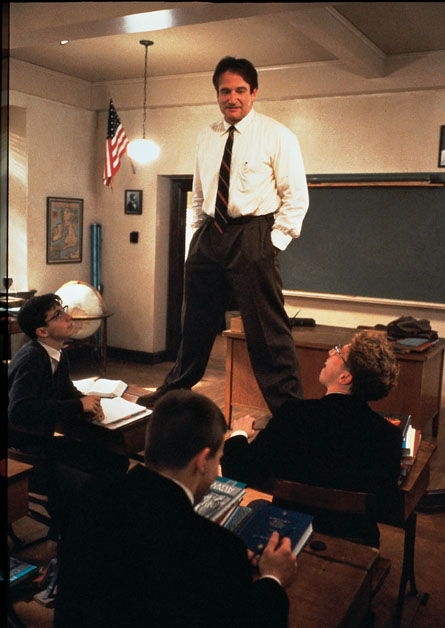
We watched some clips of hollywood movies of teachers like The Dead Poets Society, set to Pink Floyd and Queen (which got Hennie my instant respect), and then talked about various elements of teaching. What do we talk about when we talk about teaching? Well, the lecture itself was very interactive, with Hennie posing the question and asking us to fill in the blanks with basic observations of the lecture itself. Things like diction, the power dynamics between the lecturer and students, interaction, intimacy, informality, control, and different learning styles were mentioned.


Then he showed us some clips of real teachers teaching. First a grade 1 teacher who was teaching a small group of about 20 young kids to count, using everything from counting blocks to her toes, to their ears, and it was amazing. Once again I find myself wondering if I have chosen the right phase, as it definitely looks more fun to teach younger children. I can't imagine what a teenager would do if I tweaked their ears and noses to teach them maths. Hmmm...

Language in Schools
Another clip showed a high school teacher who was teaching maths to disadvantaged Xhosa kids. She gave them a problem and told them they needed to work it out in pairs, and left them to it. It was interesting that the kids discussed the problem in English even though they shared isiXhosa as a home language. Maybe they see English as the language of School, which could be good. Or maybe they see it as the language of Knowledge, which worries me (having had post-colonialism and the colonisation of the mind drilled into me during my English Literature studies).

I think that shows the importance of home language education, which is not quite fully available in South Africa yet. Granted we've come pretty far since the kids were forced to learn in Afrikaans back in the days of Apartheid, with every school now teaching an African language as a subject. But it would be ideal to see schools that taught kids the major subjects like Maths and Science in their home language so that a) they can understand the concepts without having to translate them first and b) they don't feel that knowledge belongs to a specific language or culture. Of course, there's a hell of a shortage of teachers in this country, and looking at my class, 95% of them spoke English as a home language. People in the class who speak other South African languages at home, now in their early/mid-twenties, have been educated in English or Afrikaans, and so tertiary education is also in either of those two languages, so it's clear that having fully isiXhosa or isiZulu schools are quite a bit far off, but I do hope it happens.


I think that might be why basic isiXhosa is a compulsory part of doing the PGCE, and while I'm terrified of having to learn a new language that is so different to either of the languages I speak fluently (English and French), I am keen to both learn it, and observe how they teach it to us, so I can put some of those ideas into practice when I get my own classroom.

And the grand finale!
It turns out that our university has an exchange program with Switzerland, and they will select 4 applicants to send to Switzerland to do our teaching practicals there. I cannot even begin to tell you how much I want to do this. More information on that to come, though. SO KEEN.

Ahem.